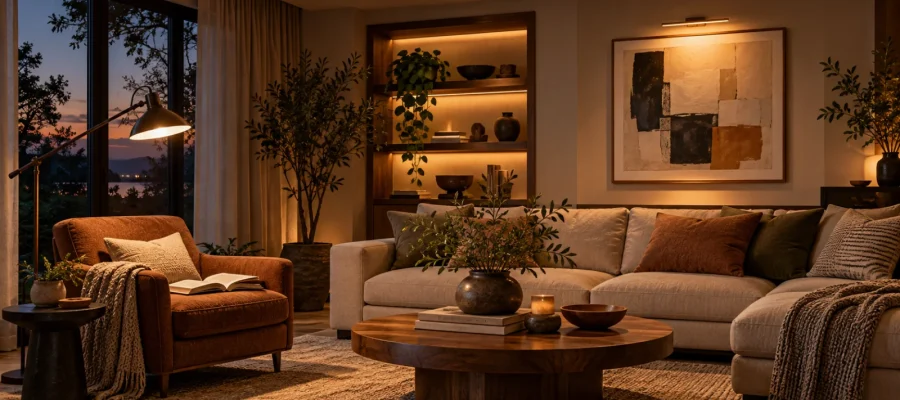
Build living room lighting around three jobs: lighting the room generally, supporting a specific task and highlighting something you want to notice. Add or adjust one layer at a time. A brighter ceiling light may not solve a shadowed reading corner or an exposed bulb shining into your eyes.
Start with the activities and seating positions you already have. That gives every proposed lamp a purpose before you compare finishes or buy a matching set.
Give each layer a job
| Layer | Purpose | Question to test at home |
|---|---|---|
| Ambient | Provide general light across the room. | Can you move through the room comfortably without relying on one bright point? |
| Task | Light a particular activity, such as reading. | Does the light reach the page or work area from the actual sitting position? |
| Accent | Draw attention to art, a shelf or another feature. | Does it improve the room when the other lights are in use? |
Not every room needs a separate fixture for every layer. A useful existing lamp can do more than one job. Keep it if its position and control work for your routines.
Read the bulb specifications
The Federal Trade Commission’s shopping guide explains that lumens describe light output, while watts describe energy use. Its discussion of the Lighting Facts label also identifies colour appearance and rated life as comparison details. Compare the actual specifications instead of relying only on an equivalent-wattage claim.
The Department of Energy’s consumer guide describes light colour using Kelvin. Lower and higher values indicate different colour appearances, rather than the amount of light. For a living room, trying one warm-white option, such as 2700 K, can be a useful starting experiment; your preference should decide whether to keep it.
Record a bulb’s base, dimensions and permitted fixture use as well. A bulb that looks suitable online still needs to fit and meet the fixture manufacturer’s requirements.
Test placement before adding brightness
Sit in every frequently used seat after dark. Look toward the lamps, television and reflective surfaces. Note exposed bright sources, reflections and the places where your body blocks the light you need.
Move a portable lamp within its permitted use and check the result again. Keep cords out of walking routes. If the next step requires new fixed wiring, discuss the desired position and controls with a qualified electrician instead of improvising a connection.
For a broader decoration approach, see our guide to a calm, Zen-inspired room. Treat lighting as part of the layout, alongside furniture and fabrics.
An illustrative evening plan
Illustrative example: a living room has a sofa used for television, an armchair used for reading and artwork on a side wall. Rather than switching every light on together, define three simple settings.
- Reading: the armchair lamp lights the book, with enough general light for moving around.
- Conversation: general lighting and one shaded lamp create the preferred balance across the seats.
- Television: adjust the available lights to avoid visible screen reflections from the usual seat.
This is a planning example, not a prescribed light level. Label the controls you would use for each setting. If an attractive accent light never helps a real activity or view, it can wait.
Check dimmer compatibility
ENERGY STAR’s downlight guidance explains that LED lights and dimmers are not universally compatible. Check the exact light and dimmer combination against the manufacturers' information. A dimmable label alone does not confirm that every existing control will work properly.
Where possible, assess one compatible product before committing to a roomful. Keep the packaging and understand return conditions. Avoid assuming that every bulb in a multipack will suit each different fixture in the room.
Before buying
- List the job and location for each light.
- Record lumens, Kelvin, base and fixture requirements.
- Check glare from the actual seats.
- Confirm control compatibility and reachable switches.
- Keep wiring work separate from furniture experimentation.
Two common questions
Does a higher Kelvin number mean a brighter bulb?
No. Compare lumens for light output and Kelvin for colour appearance. A cooler-looking bulb is not automatically the right solution for a dim corner.
Must every bulb have the same colour temperature?
No, but compare how adjoining lights look together. Start with a consistent appearance, then introduce differences deliberately if they improve a particular task or setting.
Ultimas Entradas Publicadas
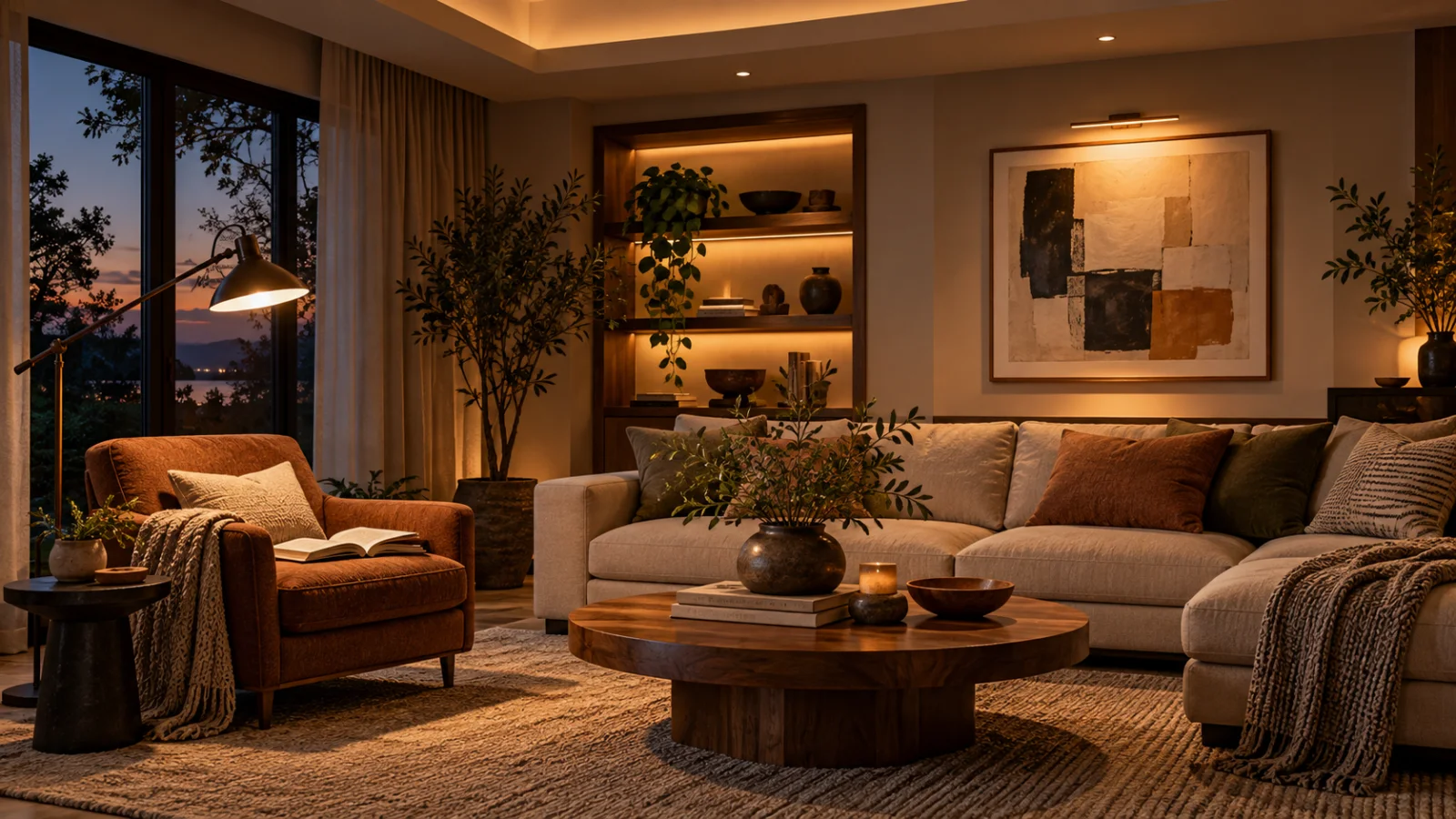
Layered Living Room Lighting: Lumens, Kelvin and Placement
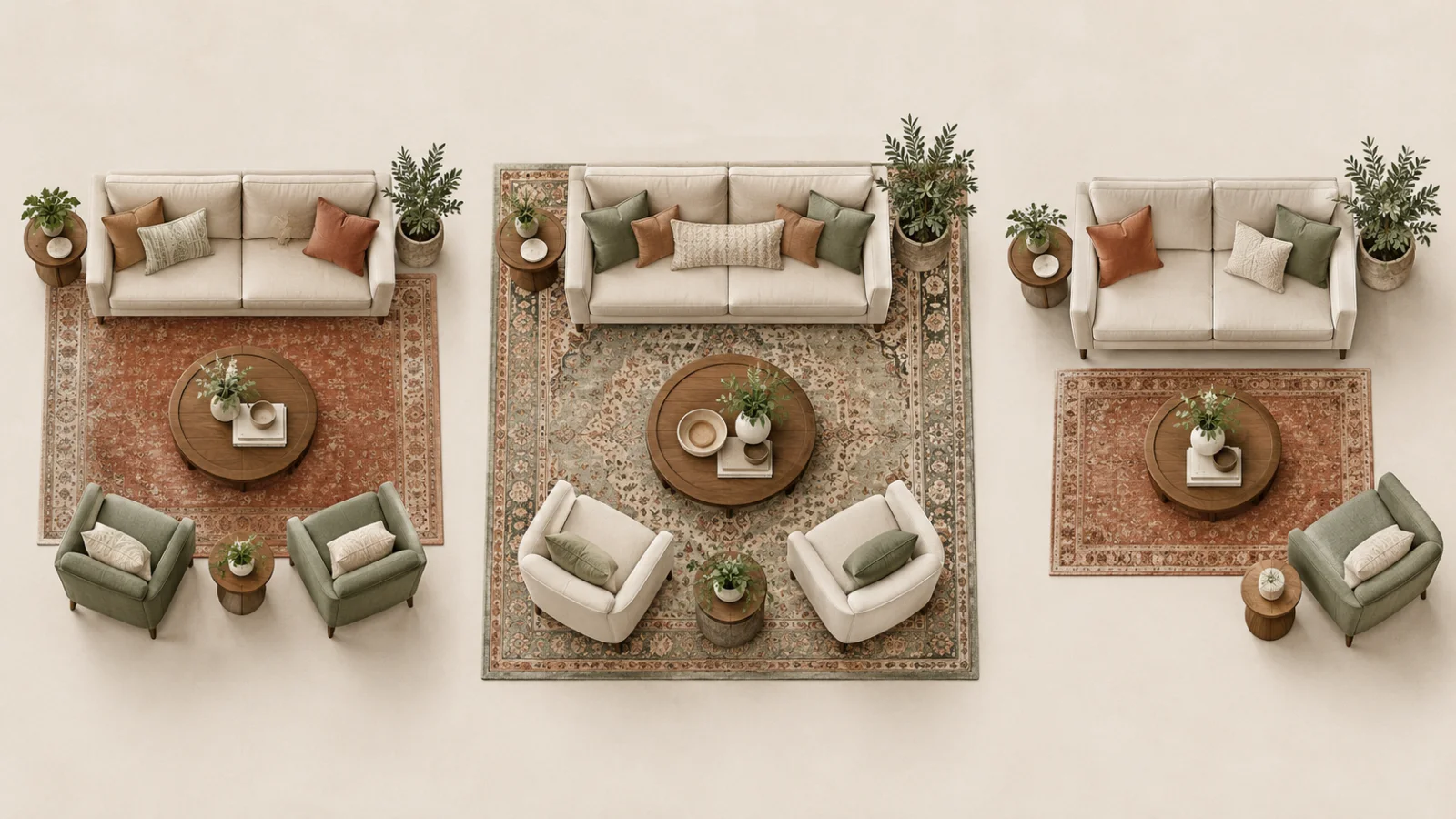
Living Room Rug Sizes: Three Layouts to Test at Home
How to Measure for a Sofa Before You Buy

Quartz vs Laminate Countertops: A Practical Buying Guide

Bathroom Flooring: Porcelain Tile vs Luxury Vinyl

How to paint a wall without traces (roller)?

Which color in concrete concrete to choose?

Place in the new skull design table

Cement cement texture